
Kadri Manjunath Temple

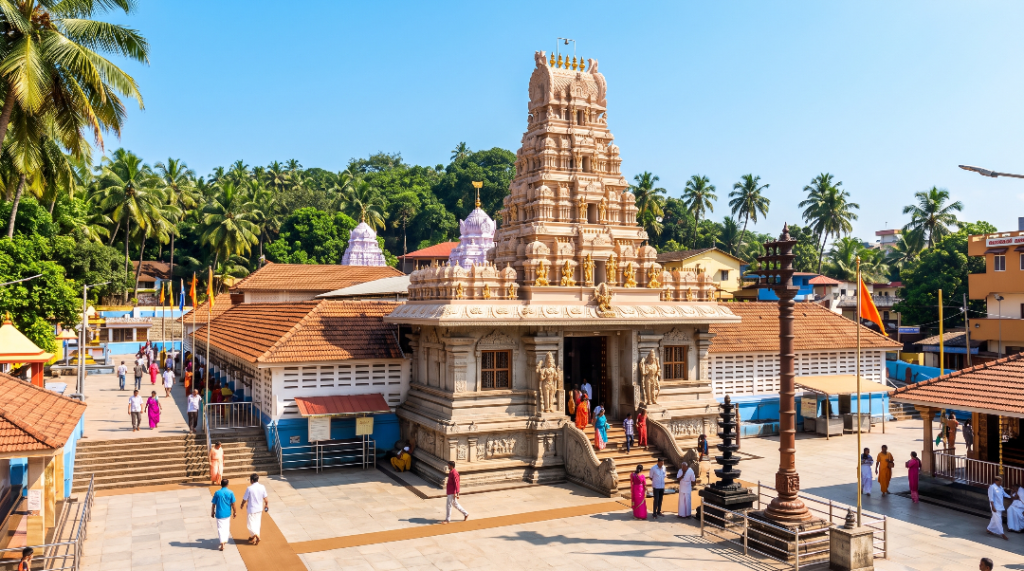
The Kadri Manjunath Temple, nestled at the base of the Kadri Hills in Mangaluru, is one of the oldest and most revered shrines in Coastal Karnataka, dating back to roughly the 10th or 11th century. Originally associated with the Vajrayana Buddhist tradition under the name Kadarika Vihara, the site gradually transitioned into a Shaivite pilgrimage center closely linked with the Nath Pantha. Built in the classic Vijayanagara and traditional coastal stone architectural styles, the sanctum houses Lord Shiva in the form of Manjunatha, alongside a celebrated 5-foot-tall bronze idol of Lokeshwara installed by King Kundavarma of the Alupa dynasty in the 10th century. Natural freshwater springs flow through the Gomukha into a series of sacred square ponds (teerthas) perched on the hillside above the temple. The site also features the prehistoric laterite Pandava Caves, making it an enduring center for spiritual retreats, traditional rituals like Deepotsava, and local cultural identity.
The temple operates under the Karnataka Hindu Religious Institutions and Charitable Endowments (Muzrai) Department, generating an estimated annual income of ₹3.5 to ₹6.5 Crore. Kadri Manjunatha Temple registers an estimated footfall of 1.2 to 1.8 million devotees and tourists annually.
Pilikula Nisargadhama
Dr. Shivaram Karanth Pilikula Nisargadhama is a major integrated eco-education and cultural tourism destination sprawling across 370 acres at Vamanjoor in Mangaluru, Dakshina Kannada. Derived from the Tulu language meaning “Tiger’s Lake,” the park blends conservation, coastal heritage, and science education into a single eco-sanctuary. Its primary attractions include the Pilikula Biological Park—renowned for captive breeding programs of Western Ghats wildlife like the King Cobra and Bengal Tiger—the Swami Vivekananda 3D Hybrid Planetarium, a Regional Science Centre, an extensive botanical arboretum, and a central boating lake. The on-site Heritage Village faithfully preserves the rural vernacular architecture and traditional artisanal crafts of Coastal Karnataka, making Pilikula a central educational and recreational hub for travelers across South India.
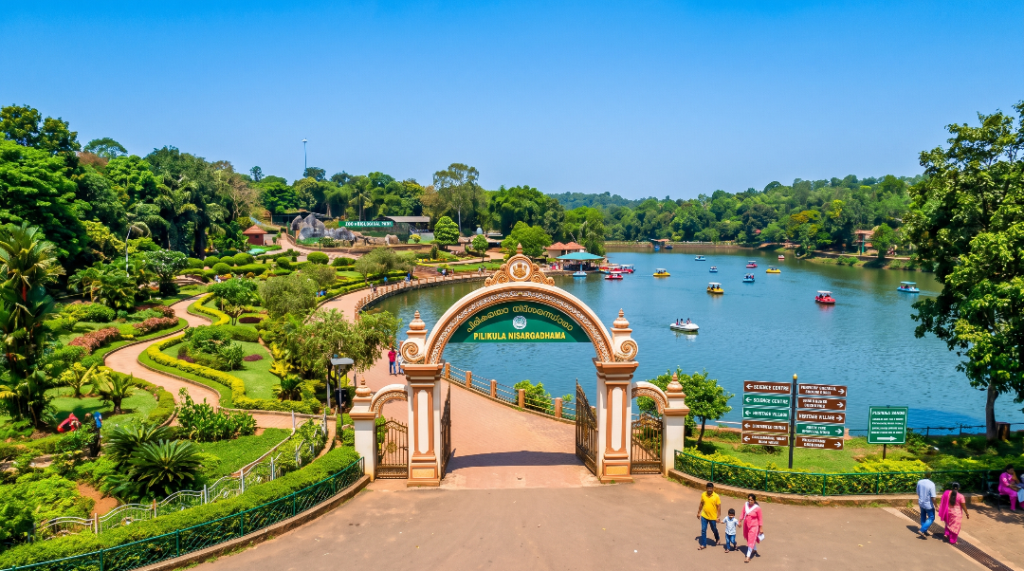
The complex generates an estimated gross income of ₹12 to ₹18 Crore annually across its various operating divisions. Pilikula Nisargadhama records an annual footfall of 2.5 to 2.8 million visitors, drawing massive turnouts of school excursions, weekend family travelers, and eco-tourists.
Kudroli Gokarnanath Temple
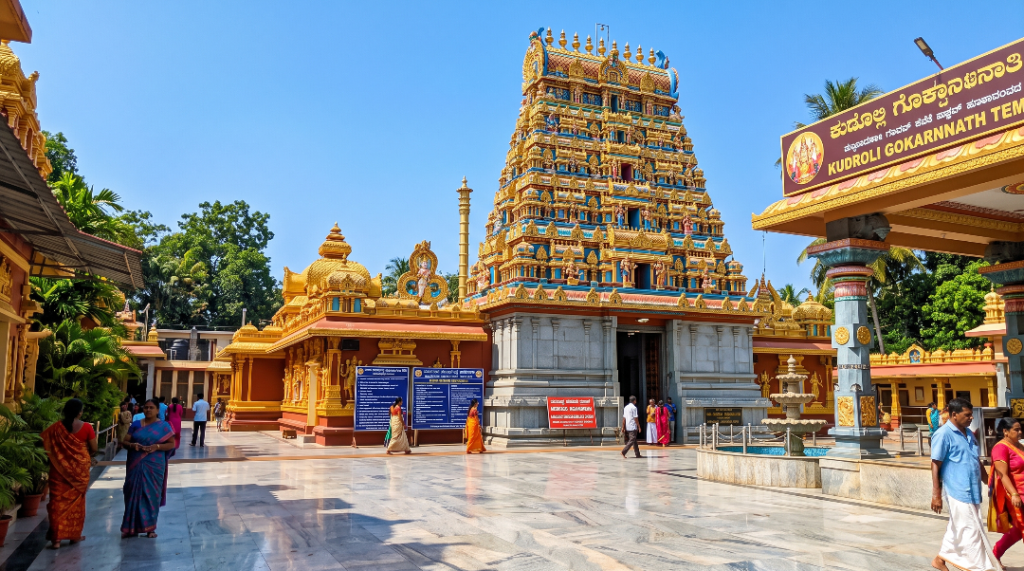
The Kudroli Gokarnanath Temple, located in the Kudroli area of Mangalore, Karnataka, is a prominent and beautiful Hindu temple dedicated to Lord Shiva (Gokarnanath). It was established in 1912 by the renowned social reformer and saint from Kerala, Narayana Guru. The temple’s unique architecture is a blend of Dravidian and modern styles, with vibrant colors and intricate carvings that reflect the spiritual and social philosophy of its founder, which emphasized equality and the removal of caste-based discrimination. The complex features a magnificent 60-foot tall ‘Rajagopuram’ (entrance tower) and is adorned with various sculptures and murals. A defining historical milestone occurred when Sri Narayana Guru personally consecrated the Shiva Linga brought from Gokarna in 1912, answering the appeal of Billava community leader Adhyaksha Koragappa to create a place of worship free from caste-based exclusion.
It is estimated that the temple receives over 2.5 million visitors annually. The annual income is significant, reflecting the vast number of visitors and the community’s support. It is estimated to generate a revenue of over ₹25 crore (approx. $3 million USD) annually, a substantial portion of which is reinvested in maintaining the temple, running educational institutions, providing free meals (‘Annadana’), and supporting various healthcare initiatives.
Someshwara Beach
Someshwara Beach, situated in Ullal near Mangaluru in the Dakshina Kannada district, is renowned for its golden shoreline, dramatic coastline, and massive sea-facing boulders known as Rudra Shile. Named after the ancient Sri Somanatha (Someshwara) Temple located on its northern cliffside—constructed during the rule of the 16th-century warrior queen Rani Abbakka Chowta—the beach blends spiritual reverence with untouched natural beauty. The rugged rock formations contrast sharply with the Arabian Sea, creating one of the most scenic vantage points for sunsets in Coastal Karnataka. Because of strong undercurrents and steep drops near the rocks, the waters are strictly guarded against swimming, making Someshwara a sanctuary for contemplative strolls, shoreline photography, and temple pilgrimages rather than commercial water sports.
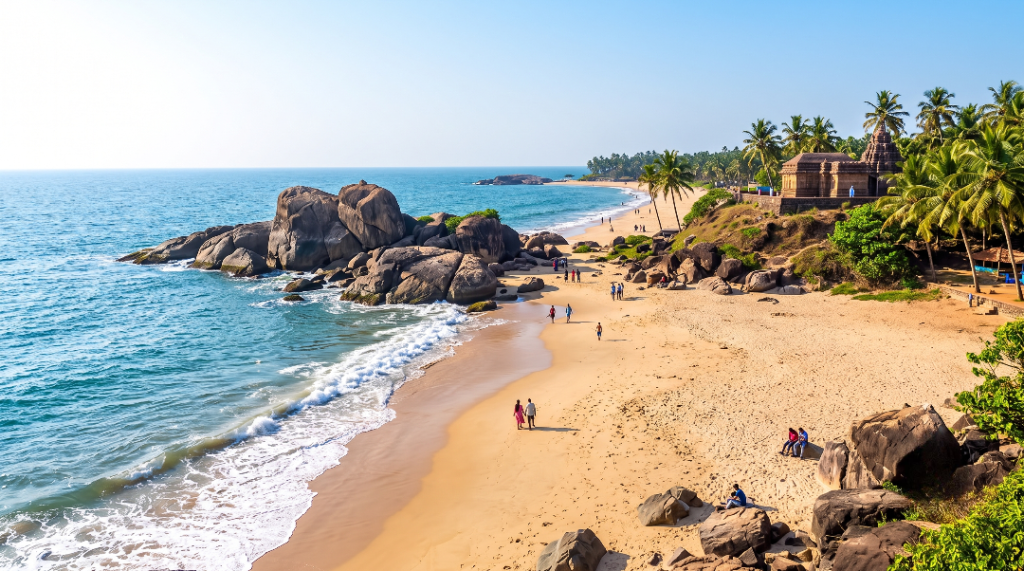
Someshwara Beach is one of the most visited coastal destinations in the region, drawing an estimated 3.5 to 4.3 million visitors annually. The destination generates an estimated ₹8 to ₹12 Crore annually in indirect local revenue. This financial turnover is driven by nearby homestays and coastal resorts, temple pooja offerings, transport services (taxis, auto-rickshaws, and tourist coaches), and a network of traditional coastal seafood stalls and refreshment shacks.
Sultan Battery
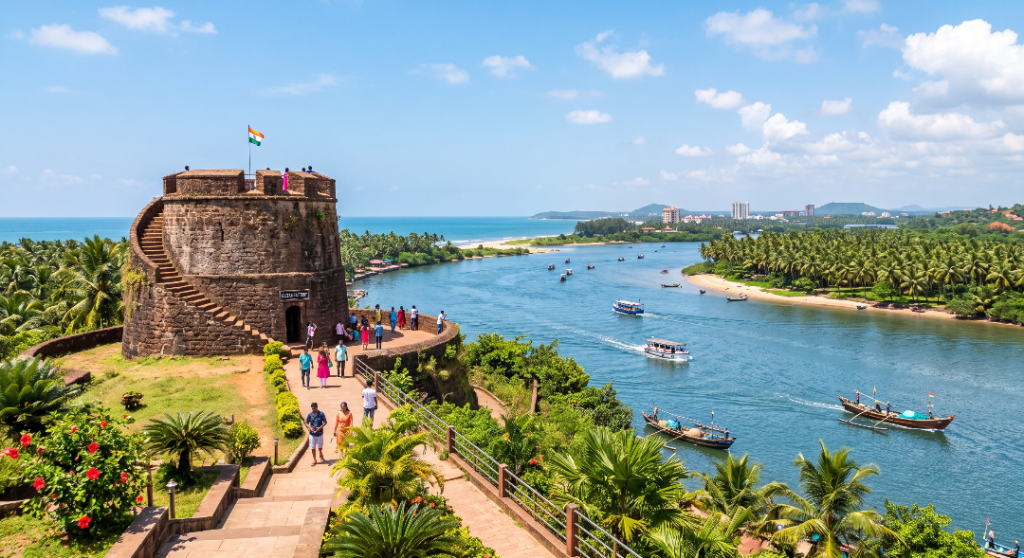
Sultan Battery (often referred to as Sulthan Bathery), situated in the Boloor area along the banks of the Gurupura (Phalguni) River in Mangaluru, is an 18th-century coastal watchtower constructed in 1784 by Tipu Sultan, the ruler of the Kingdom of Mysore. Designed primarily as an artillery battery rather than a standard fortress, the structure was erected using rugged black stones to prevent English warships from entering the river mouth and gaining access to Mangalore’s vital waterways and trade routes. The mini-fortress features dedicated mounting platforms for cannons, slit apertures for defensive fire, and subterranean chambers that historically served as an arsenal for gunpowder and weapon storage. Today, protected as a heritage monument, it offers sweeping panoramic views of the river merging toward the Arabian Sea, functioning as a popular sunset viewpoint, water-sports hub, and the primary boarding point for ferry crossings to Tannirbhavi Beach.
The destination contributes an estimated ₹2.5 to ₹4.5 Crore annually. Entry to the watchtower monument itself is free of cost, maintained under heritage conservation by archaeological and civic authorities. Sultan Battery records an estimated footfall of 5.5 to 6.5 lakh (550,000 to 650,000) visitors annually.
Tannirbhavi Beach
Tannirbhavi Beach, located in Mangaluru along the Arabian Sea coastline of Dakshina Kannada, is one of the most prominent coastal getaways in Karnataka. Bordered by casuarina tree groves and situated adjacent to the Gurupura (Phalguni) River, the beach is accessible via road through Kuloor Bridge or via passenger ferry from Sultan Battery. It is divided into distinct operational stretches, with Beach-2 earning the prestigious international Blue Flag certification for meeting rigorous environmental, safety, and cleanliness standards. The coastline features developed amenities including wooden walkways, modern shower and changing rooms, dedicated lifeguards, shaded beach shacks, and water sport activities like surfing and jet skiing. It is also home to the adjoining 15-hectare Tannirbhavi Tree Park, which showcases medicinal plants of the Western Ghats and life-sized cultural sculptures.
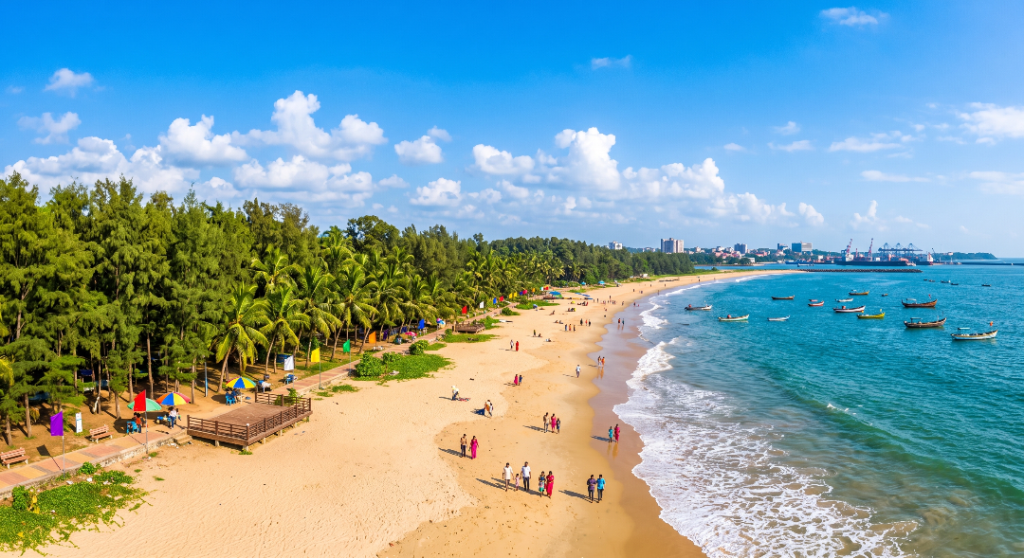
Tannirbhavi Beach records an annual footfall of 3.5 to 3.8 million visitors (official tourism records report approximately 37.5 lakh annual tourists). It ranks as one of the top three most visited beach destinations in Dakshina Kannada.Tannirbhavi generates an estimated ₹8 to ₹12 Crore annually.